Featured

Blog Post 1

Week 2: Politics & Sexuality

RachelH

Week 2:

I would just like to start by saying, it really frustrates me that men/people will work so hard against women just because they’re women. I.e. the mandatory 30 percent quota for female candidates in 2003, Mexico.

I thought it was interesting that “most of the women that occupy decision making positions are fair-skinned and Spanish speaking” (Htun 118). I don’t find this surprising, but it is interesting to think about the different levels of racism within a community. When I was in Peru, I had a friend who has a very dark skin tone. We were walking on the street one night coming home from a salsa club and someone shouted N*gger at her. I was shocked. I had never thought that a person who is already discriminated against for having brown skin could be racist toward someone darker than they are. I always thought wouldn’t you be mad at white people?

Something else I thought was smart and frustrating was that Cristina Fernández de Kirchner (Argentina’s president 2011) made a point to avoid “any feminist label.” It makes sense not to take on the feminist persona in order to appeal to all women because often times the label is misunderstood. I wonder however, if her values line up with feminists ideologies. 

Florencia Cortés-Conde & Diana Boxer mention social rights over individual rights. I am curious as to what are social rights versus individual rights. In my mind, I think of social rights as a change in the culture and the attitude towards women and individual rights as the rights set in the law. Individual rights makes me think of RBG and changing the code in order to allow for equality. 
May 5 Post

A Fantastic Woman. Great movie! Great controversial topics! It is awesome to see the topic of Transgender woman in a relationship with an older man—two things that are unconventional, but when added together make it even more unacceptable in the public eye. Before I started the movie I watched the trailer. And I watched it in Spanish without subtitles, so I didn’t the entirety of the trailer. I did not realize the woman was transgender. I think I’ve seen her in other movies before. I was worried that the actress was a cis woman playing a transgender woman and if that were the case I was going to have a problem with it. But I looked it up and it turns out the actress is Daniela Vega Hernández, a Chilean transgender actress and lyrical singer. Then upon reflection, I was disappointed with myself for assuming the woman was a cis woman. Why did I assume that? Was it because she looked like a woman? Do trans women have to look manly? What a horrible thing for me to say. Is it not a good thing that I did not know she was transgender? Wouldn’t the world be a better place if everyone accepted trans women as women? Couldn’t we all be women? I’d love to hear thoughts on this. It’s something I’ve thought about before. I understand the necessity for the labels and the cis labels to not undermine trans women as real women because they are. I think in an ideal world the need for labels wouldn’t be so great if everyone accepted everyone for who they are. Then again, I’ve always known who I am–girl. girly girl. favorite color, pink. I’ve never known what it’s like to feel lost in your identity. My sister is struggling with this right now. And as much as I am trying to help, I don’t think I do anything but support. An over share maybe…but oh well. I finished the movie and I rather liked it. It kept me on edge and I really felt for Marina. Transitioning is no easy feat and once she thought she was past the hard part in her life and thought she’d settled down with a loving man, it is all taken away from her and her world is thrown into shambles. I think I’ll recommend the movie to my parents. They might learn something.

April 28 Post

I think it’s interesting the author writes that “as we women are a part of nature and the universe, we are called to care for and defend our Mother Earth” (328). I thought this was interesting because I thought yeah! Why are women being discriminated against when the community praises Pacha mama? But while this is an issue within the community that is not the issue being addressed. We’re talking about the discrimination of indigenous peoples and indigenous women. The first demand under “[Concerning our Indigenous] Worldview and Identity—“ states, “We demand that our worldview not be ‘folklorized’ by governments and private businesses” (329).  The main concern is that the indigenous and traditional way of life—the culture—not be trivialized. What I found interesting was the word ‘folklorized’. I had not heard this word before but it makes perfect sense. These women’s way of life is not just a story made up to entertain the public. It is real to the indigenous peoples living it. 

Another thing I noticed was in section 3. Strategies and Mechanisms to Strengthen Women’s Political Participation the first statement is that women should “strengthen our alliances and connections so as to have a voice in decision-making fora—political, economic and social—for the good of all” (330). This reminds me of when I spent time in Cusco, Peru on a study abroad. My host mom and all my teachers taught me about the indigenous religion and culture. But they always taught about the past. They told me about the Inca and what their way of life looks like. When I asked about modern day they all told me the indigenous communities are uncivilized they don’t know how to live in the city. I distinctly remember one of my teachers telling me that when indigenous peoples came into the city to sell their merchandise they would pee on the street because they didn’t know any better. I didn’t know what to say at the time. I was shocked because that is not what I saw. I had numerous conversations with indigenous women on the bus—and if they could figure out how to work they bus I’m sure they could figure out bathrooms. I decided what I was hearing as racism towards the indigenous communities. I was hurt by this. And reading this article only confirms my thoughts. Despite what my teachers and host family told me and believe, Indigenous women are entirely capable of anything.

April 21 Blog Post

For this week’s blog post I want to focus on Rosario Castellanos’ observations and comments on Mexican-style marriages. What I found that stood out the most to me was that it was very similar to Betty Friedan’s Feminine Mystique.  I was not surprised by this however. It makes sense that I would make this connection. Castellanos’ accounts are dated 1964, only a year after The Feminine Mystique was published. My favorite part about Castellanos’ version of marriage was how she tells it. She is blunt and a little bit abrasive. It hurts your feelings almost to read it. In Friedan’s she is kid and on the woman’s side it feels like. She makes it seem as if women are left no other option but to walk the streets of their neighborhoods endless or take 6 hour naps to deal with “the problem with no name” that every woman struggles with. In Castellanos she tell you how it is with less pity for the women but more anger for both men and women for not realizing how it is and how it is bad. She also never tells you that anything that she writes about or that happens in a marriage is bad directly. But when you read it you know this is not right. For example, “Men stray, it’s true. But they come back. It’s natural law, as unvarying as the migration of birds. Don’t spoil his return by making a scene—with tears, jealousy, or recrimination! Instead double your sweetness and understanding; do your best to improve your appearance; find a way to make the children invisible during those brief moments when your husband is at home” (284). I mean, wow. She states this and you think yes wow that’s how it is. But are you happy with it? She phrases these truths in a way that makes you want to change. You’re embarrassed to be the woman doubling your sweetness—at least I would be.

April 14th Blog Post

I thought these two articles were interesting. I always love reading about women standing together to fight injustice. It also is sad to read about these injustices committed by the government—any government. It infuriates me and breaks my heart at the same time. But what was inspiring was women coming together to fight a common enemy even when their core views did not align. Like when conservative women and liberal women came together. This is why it is hard to define feminism. Every woman is a feminism if she believes in the equality of the sexes. I think this is all that matters. Well of course it is not all that matters but it is the core of feminism. After that you can be as conservative or risqué as you want. It is the choice and the freedom to just be. Then you could get into other things like people who believe in equality of the sexes but not gay rights. We have a problem there. Feminism is about everybody. 

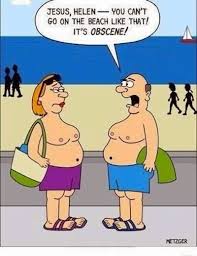
Something I found interesting, and a little bit humorous, in the Isabella Cosse article was the double standard in Argentina’s 1922 criminal code that was enforced throughout the 1960s that stated “a husband was only con­sidered adulterous if he kept a mistress or was found with another woman in the bed he shared with his wife, but for a wife it was enough to have had a casual encounter with another man” (416). I mean wow. I just had to laugh because it is too ridiculous. It makes me think of all the double standards today. I like this artist’s take: 

April 7th Blog Post

I find it fascinating that the thing that universalized the character of the opposition to the Somoza was women’s extensive revolutionary activism or involvement. It’s funny how, in all the articles we read, people don’t think they need women or that women don’t belong in whatever it is their doing, but it always boils down to the women. And the fact that they are oppressed together and have to fight together to work, for example, is the unifying factor that makes the effort so strong. What I find interesting in the Molyneux article was that a disappearance of individual identity wasn’t really lost with women’s war efforts only those on the front-line guerrillas where a degree of masculinization and a blurring of gender distinction took place. In my mind this is a good thing. We are all just people at our core. Where we look for differences, we find them. In a battle setting it doesn’t matter what is between your legs and how you may think that determines your role in society.

Thinking about women’s determined roles and the part they must play even when they have a position of power—a platform upon which they can enact change for the better, like Eva Peron and another that comes to mind is Toni Morrison, I am intrigued by the manner in which they use their platform. Eva Peron was without question more popular than her husband but the stance they both took and showed the public was that Eva held an inferior role to her husband. She was his subordinate, yet this worked in her favor. She used this position to appeal to the public whose values were very traditional. A woman has a place and Eva Peron knew where hers was. I see it as very strategic and manipulative—I like it. The same goes for Toni Morrison. Everything she writes is inherently feminist, yet she never took on that label. Why is this? I believe she decided not to call herself a feminist so that she could reach a larger audience. And hopefully turn a few people.

Week 7 Blog Post

I thought Katherine Elaine Bliss’ article on prostitution and family ties was interesting to read. I was saddened to read that most women found their way to sex work through domestic servant positions that their families placed them in because they thought those families would care for their young daughters. Unfortunately, reoccurring sexual abuse from male family members sent these girls running back to their families who refused to accept them now that they had sexual experience. A question I had about this was why wouldn’t they take back their daughters? I assume for religious reasons of virginity and purity.

When I read about the familial community in the brothels I thought of all the various groups of castaways–those who are not accepted by their own biological families are so look for families elsewhere amongst people like themselves. I thought of drag and how drag queens always have a drag mother–someone that takes them under their wing and shows them the ropes–protects them. I compared drag mothers to brothel Madams or Mothers. The brothels were a family community. The girls would look out for each other, relying on each other to protect their interests while they were sick–which also allowed sick women to go get help when they needed it. I found it satisfyingly odd that there were no men–that is to say no pimps–in charge of these women’s work. When Bliss wrote it all seemed rather tranquil. Which leads me to my next question, what kind of contraception did the women have–condoms? What kind of sex education were they exposed to and by whom? At the end of the article Bliss mentions that some people work to make prostitutes aware of their rights and seek to protect them from abuse and STDs. My questions is who are these people? How do they seek to protect prostitutes? And where was any mention of the risks these women take? Bliss does state, these women threw themselves into the street putting themselves at risk of abuse, violence, disease and they did so to protect their children. I wonder if prostitutes were a target for serial killers like they are/were in the United States. I’d love to see some numbers and hear about that. I’m sure it can’t be all happy go lucky like Bliss implies it is.

Week 6 Blog Post

I found the Lara Putnam article interesting. The stories varied from country to country, place to place, but they were always the same story in the end. Women never got their fair share or were jipped, slighted of matters concerning their own property. As was the case of Hermance Fontine in Costa Rica. I liked hearing about Costa Rica. When I read the first sentence in the paragraph, “Women of many origins, Amelia Esquivel among them, ran core stores or bars in Limón in partnership with husbands or lovers” (Putnam 144). I thought oh good a happy story. I was wrong the sentence following said something along the lines of these business endeavors seldom ended well for these women. Not happy at all. Something else I thought rather interesting was the mystery woman who stayed in Amelia Esquivel’s house and who no-one knew who she was, “an employee, houseguest, relative or foster daughter” (Putnam 144). Putnam mentions that this girl owed Señora Esquivel her obedience and loyalty because, when necessary, Señora Esquivel would beat her. I am not sure what is going on in this situation but I find it sad that women are beating other women into obedience. Another example of this violence between older women and the girls either in their employ or care is that of Rosa Chavez. Rosa was a fourteen-year-old placed with a family in in Port Limón. Rosa had decided to run after the woman she was staying with beat her for not making the beds. This is another case of violence between the women and I have to wonder if it stems form a lack of power amongst wives in society and so they find a way to be superior to someone and that someone is the young girl that holds a lower status than she. Reminds me of the saying about bullies. A bully is usually bullying someone because he/she was bullied him/herself

Week 5 Blog Post

I thought it was interesting to read that the first female writers were limited to “expressing their opinions on the ‘woman question’ and in exclusively feminine journals (Chambers 229). I was just watching the Oscars and I cannot remember who, but one woman introducing an award made a joke about the winner gets yada yada and the loser has to spend an eternity getting asked what it is like to be a woman in the film industry… That is what immediately popped into my head when I read the “woman problem.” And although it is not my first time hearing about the “woman problem,” for whatever reason it struck me in that moment that we are still dealing with those kinds of questions–with what people like to consider the woman problem. And although being a woman in the industry I’m sure is drastically different from a man’s we still are treating it as the “woman problem”. Female actors are actresses and they have to compete against other women instead of everybody. Could we have a joint group in the Oscars: Best Actor. Period. And all the nominated actors (men and women) get to be in the same category. May the best actor win. 

I liked reading Rebecca Earle and how she incorporated primary texts from women’s recordings during war time into her overall text. We really cannot underestimate the importance of primary sources when considering not only what happened but what was it like. What was going through the people’s minds, how did the stress of war differ from male to female.  

Week 4: Blog Post

Week 4 Blog Post:

I am amazed that people, especially men, back in colonial times actually believed women when it was their word against men. I also am amazed that priests advised women to sue their husbands. Everything I have learned about the feminist movement in the US points to women cannot be trusted nor believed—men will always be number one. I thought it was funny, although it may be in bad taste, that men left their wives behind in Spain when they sailed to Quito. “Bye, honey. I promise I’ll send for you the first chance I get.” Then they leave and go to Ecuador and screw all the natives—real nice. My question is, why did the crown care? The women left back in Spain must have been a nuisance otherwise why would men be charged. 

I really loved reading in Leila Ahmed the comparison of women to animals—had to hold an entire council to determine whether women are animal or human (526). Really! I am not surprised. Aristotle placed women on the same plain as slaves who were not considered humans either. It really baffles me that what you look for you find and what. Men looked for the differences between themselves and women—black people, native Americans…you name it. In reality we are more alike than we are different. Anatomically we basically have all the same stuff just jumbled around differently. A research article I read way back in the day (19th century I believe) looked for the similarities between men and women and believed they found it. For example, breast milk was the female version of semen because it was white. The clitoris was a little penis…etc. Science wasn’t at its best yet. My point is they went searching for similarities and found it. When you go looking for differences that is what you will find.

Week 3: Gender Violence & Research on Women/Gender/Sexuality

“Rape was widely used as a weapon” (The Guardian). This statement is too true all over the world. I don’t think rape could be described as anything other than a weapon. Often times rape is a result of racism as we see in the case of the Guatemalan women who were forced into sex slavery, “almost 90% of the victims were indigenous women” (The Guardian), or the case in Peru.  After reading this article I am left feeling empty. I cannot imagine going through any one of the horrible things those women went through and still be strong enough continue on. I think the article about enforced sterilizations in Peru goes to show that you can’t take anyone’s word for it—so to speak. Fujimori disguised his racism through what he knew was something the world would accept and encourage—family planning. But at the root of his twisted mind was a deep hatred towards indigenous men and women in Peru, “unos cuyes.” He thought of them as nothing more than animals that needed to be controlled. I thought this article was interesting and engaging because it was a primary source. The author had been to Peru, she talked to a woman who was performing these enforced sterilizations. It easier to get behind the cause than when I read a secondary source like the Paula Godoy-Paiz essay. While the Godoy-Paiz essay still beneficial to read it did not place me in the moment.

These are just a few thoughts that ran through my head while reading the assigned articles. I am mortified at the violence men and women alike can impose upon innocent people. It makes me wonder where it stems from—although if I had to wager a guess, I’d say racism. Racism has deep dark roots that sometimes we don’t see unless we take a closer look.

Design a site like this with WordPress.com
Get started